Can you really buy a $1 home in Chicago? Here's what you need to know.
Chicago $1 homes aren’t what they sound like. The city sells vacant lots to developers for $1, and the new homes sell at market rate.

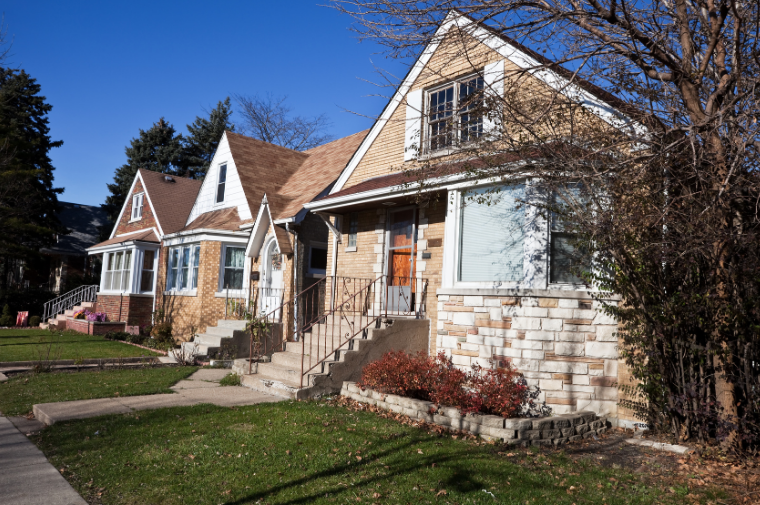
Vacant lots are a familiar sight on blocks in Morgan Park, West Chatham, South Chicago, and West Englewood. Lately, some pretty intriguing claims have been going around on social media saying Chicago is selling homes on those lots for $1. The reality is much narrower. The city is selling the lots for $1, and only to developers who agree to build homes on them.
The program, called the Missing Middle Infill Housing Initiative, targets city-owned vacant lots on the South and West sides. Those neighborhoods have been emptying out for decades. Chicago’s Black population fell by more than 265,000 between 2000 and 2020, and most of that loss hit majority-Black communities on the South and West sides, according to a WBEZ analysis. Englewood and West Englewood have lost 42% and 38% of their residents since 2000. “Missing middle” refers to the two-flats, three-flats, and townhomes that once housed middle-class families on those blocks. Many were torn down, leaving gaps behind.
The city says the goal is to bring residents back to neighborhoods hollowed out by decades of disinvestment. It also wants to create homes working families can afford to buy. The city owned more than 7,000 vacant residential lots as of spring 2025, according to its program guide, with many of them on the South and West sides.
The city also pitches the program as a way to build wealth through homeownership. That gap is wide. Black homeownership in Chicago sat at 44% in 2022, compared with 72% for white households, the Chicago Urban League found. The same report put the median net worth of Black Chicagoans at $0.
The program started on the West Side in North Lawndale, where the first project broke ground in January. That same month, the City Council approved 27 buildings with 81 homes in Morgan Park, South Chicago, and West Chatham. Five minority-led development teams will build them. In August, the city picked four more teams to build 62 homes on 30 lots in West Englewood and South Chicago. The City Council still has to approve the subsidies for that round.
Developers who win a cluster of lots pay $1 per lot and can get $50,000 to $150,000 per unit in construction grants, according to the city. The money comes from Mayor Brandon Johnson’s $1.25 billion Housing and Economic Development bond. The maximum appraisal per lot and per project is $224,000. Developers can propose townhomes, two-flats, three-flats, or six-flats, and every building must be sold to someone who will live in it. Any qualified developer can apply, but at least 26% of construction costs must go to city-certified minority-owned businesses.
Developers apply through the city’s ChiBlockBuilder land sale portal. Applications must include design plans, a construction timeline, a budget, financial statements, prequalification letters, and details on past projects, all following Department of Planning and Development (DPD) guidelines. DPD scores each application on the developer’s experience, finances, design quality, number of units, and expected impact on the neighborhood. After DPD picks its finalists, the City Council must approve each land sale and subsidy. The city also holds community meetings to introduce the selected developers. The city gives priority to teams that can build quickly and that partner with less-experienced developers.
So what does this mean if you want to buy? The homes won’t cost $1. They’ll sell at market rate to people who plan to live in them. The city estimates two-flats will sell for $450,000 to $550,000 and three-flats for $550,000 to $700,000, according to its FAQ. Prices must stay affordable to households earning up to 140% of the area median income. In a two-flat, a unit priced above about $430,000 triggers a required price cut.
Those rules follow the home for five years. At closing, buyers sign a recapture mortgage, an agreement that lets the city take back part of its investment if the buyer sells early. Buyers also sign a residency covenant that sets rules on occupancy, use, and upkeep. The recapture covers up to $64,000 and drops by 20% for each year the buyer lives there. Sell before five years, and you pay the remaining balance to the city’s Department of Housing at closing.
If you want to buy one, you’ll go through the developer, not the city. The city doesn’t pick buyers, and the homes don’t come with special property tax breaks beyond standard Cook County homeowner exemptions.