South Side parents want more for their kids' schools as CPS funding falls further behind
Chicago Public Schools' funding has dropped to 73% of what the state says CPS needs. Here's what it means for South Side schools and the school board race.
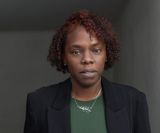
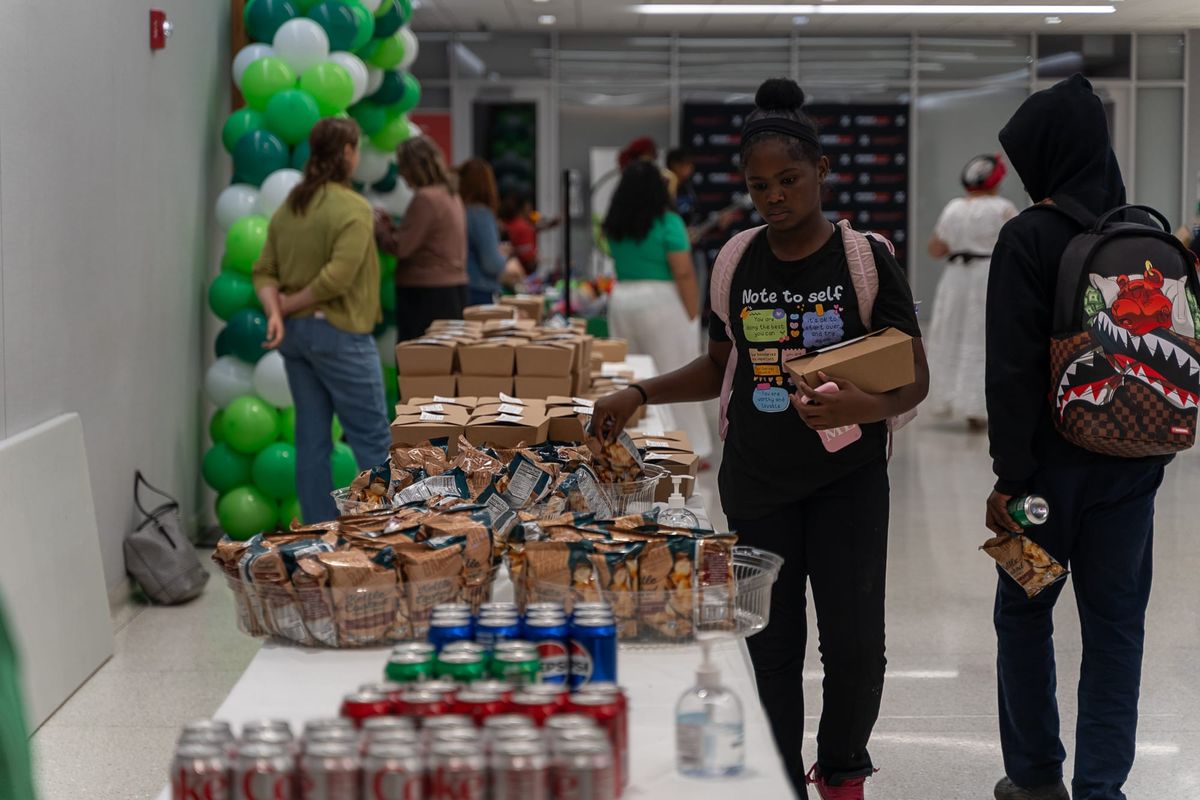
Katrina Adams wants her daughters to have more opportunities to explore technology, music and the arts before they reach high school.
Adams, 44, lives in Marynook in Chicago’s Avalon Park community area and is executive director of Starr Community Services International. Her two younger daughters attend Burnside Scholastic Academy. Adams said she isn’t aware of significant teacher vacancies at Burnside, but she wants to see more specialized educators and enrichment opportunities for younger students.
As CPS faces another difficult financial year, schools are also balancing staffing costs and other resources. Those needs can look different from one school to another.
Chicago Public Schools has entered another school year with a 1.6% teacher vacancy rate on the first day, down from 2.46% the year before.. But district officials say schools with higher vacancy rates remain concentrated on the South and West sides.
“When there’s instability in the budget, it makes it really hard to staff and retain high-quality educators,” Kelsey Bakken, director of policy at Advance Illinois, told The VP Chicago.
For South Side families, those budget decisions can determine what resources are available inside their neighborhood schools. And Chicago's first fully elected school board will inherit responsibility for overseeing a district still operating with less money than the state says it needs.
What does it mean when CPS says it needs more money?
CPS receives money from local, state, and federal sources. But the district does not receive enough money to meet what Illinois calculates it needs to adequately serve its students. As of fiscal year 2026, the district has about 73% of the resources the state’s funding formula says the district needs to meet its students’ needs, according to the district's FY2027 revenue report. But that number has been sliding. CPS was at 81% two years earlier, and the district estimates it would need nearly $1 billion more to reach the state's own adequacy goal.
Bakken said that’s an improvement from 63% when the state’s current funding formula was adopted in 2017. But the number has dropped eight points in two years, from 81% in fiscal year 2024 to 79% in fiscal year 2025. CPS estimates it would need another $985 million to reach the state's goal of 90% adequacy.
“What would it be to budget my household income based on 70%?” Bakken said. “You got to make some tough decisions.”
Those decisions can show up in staffing levels, instructional materials, transportation, and specialized services, Bakken said. Temporary funding can also create challenges when schools add staff or programs that families come to rely on, but the money paying for them eventually runs out.
“This was provided one time. It’s not provided anymore. What’s going on there?” Bakken said, describing the questions families may have when resources disappear.
That happened across CPS when federal COVID-19 relief money ran out. The district received nearly $3 billion in relief funding over six years, and fiscal year 2026 was its first since 2019 without it. Much of the district's recent budget gap came from staff hired with that money.
Money isn’t the only reason schools struggle with staffing
Even as CPS has reduced teacher vacancies districtwide, some schools continue to have a harder time filling and keeping positions.
Amy Arneson, a senior research associate at the University of Chicago Consortium on School Research, said several factors can contribute to teacher turnover.
Working conditions, school leadership, and relationships among teachers can influence whether educators remain at a school. Geography can matter, too.
Arneson said geography is another challenge for schools on Chicago’s South Side. There can be a disconnect between where teachers live and where schools need them most. A teacher may accept a position farther from home, stay for a year or two, then leave when another job opens closer to where they live, she said
A Chicago Reporter analysis of CPS special education layoffs found a similar pattern. Of 191 rehired classroom assistants who had worked on the North Side or Downtown, only two moved to South or West Side schools. Meanwhile, 20 of 70 rehired special education teachers from South and West Side schools moved to North Side or Downtown jobs.
For schools that have struggled to recruit and keep teachers for years, that turnover can make it harder to build a stable staff. A 2009 Consortium study found about 100 CPS schools were losing a quarter or more of their teachers every year, and many of those schools served mostly low-income Black students. Arneson said some schools also face challenges tied to their reputations or perceptions about the neighborhoods where they are located, requiring principals to work harder to attract prospective teachers.
“There isn’t like a quick intervention to come in and say, all right, we’re gonna fix this year,” Arneson said.
CPS has tried to address recruitment and retention through programs including its Opportunity Schools Initiative. Arneson, who is currently researching its initiative, said it includes recruitment assistance for principals, professional development for school leaders and mentorship for teachers during their first two years.
Money is already shaping the school board race
The district's financial challenges will also be before voters in November, who will choose a fully elected 21-member school board.
CPS approved a $10 billion budget for the fiscal year 2027 after facing a $732 million deficit. The budget relies in part on $150 million in additional state funding that has not yet been secured: $100 million in additional Evidence-Based Funding and $50 million in mandated categorical revenue from the state, plus $285 million in surplus TIF money from the city. If some or all of it doesn't come through, CPS says it may have to make mid-year cuts. At a Sept. 15 WTTW forum, the four candidates running for School board president offered different approaches to the district’s financial problems.
Current board member Jessica Biggs said CPS should not build its budget around money it has not secured and called for a five-year financial recovery plan.
Hilario Dominguez said the board president should push state lawmakers for additional funding rather than assume Springfield will say no.
Sendhil Revuluri said CPS needs to reconsider how it spends the money it already has and start its budget decisions with what students need.
Victor Henderson called for greater scrutiny of CPS finances and said he would not support additional tax increases until there is a clearer picture of how the district is spending its money.
What can families watch?
One place families can look is CPS’s annual Evidence-Based Funding spending plan.
School districts receiving state funding are required to submit plans showing how they intend to prioritize additional money received through the state’s funding formula, Bakken said. Those plans are publicly available through the Illinois State Board of Education.
The plans can give families a way to see how districts say they will use state dollars, while parents like Adams say understanding what individual schools need also requires listening to the families inside them.
At Burnside Scholastic Academy, Adams wants the next school board to understand why specialized educator and enrichment opportunities matter for younger students.
“Every school, every community is totally different,” Adams said.