Families searching for loved ones missing from a South Suburban cemetery are losing the resources to help.
Sixteen years after a scandal desecrated thousands of graves at Burr Oak Cemetery, the official resources built to help families find their missing loved ones have vanished. What's left for families still searching are the volunteers who refuse to let them search alone.

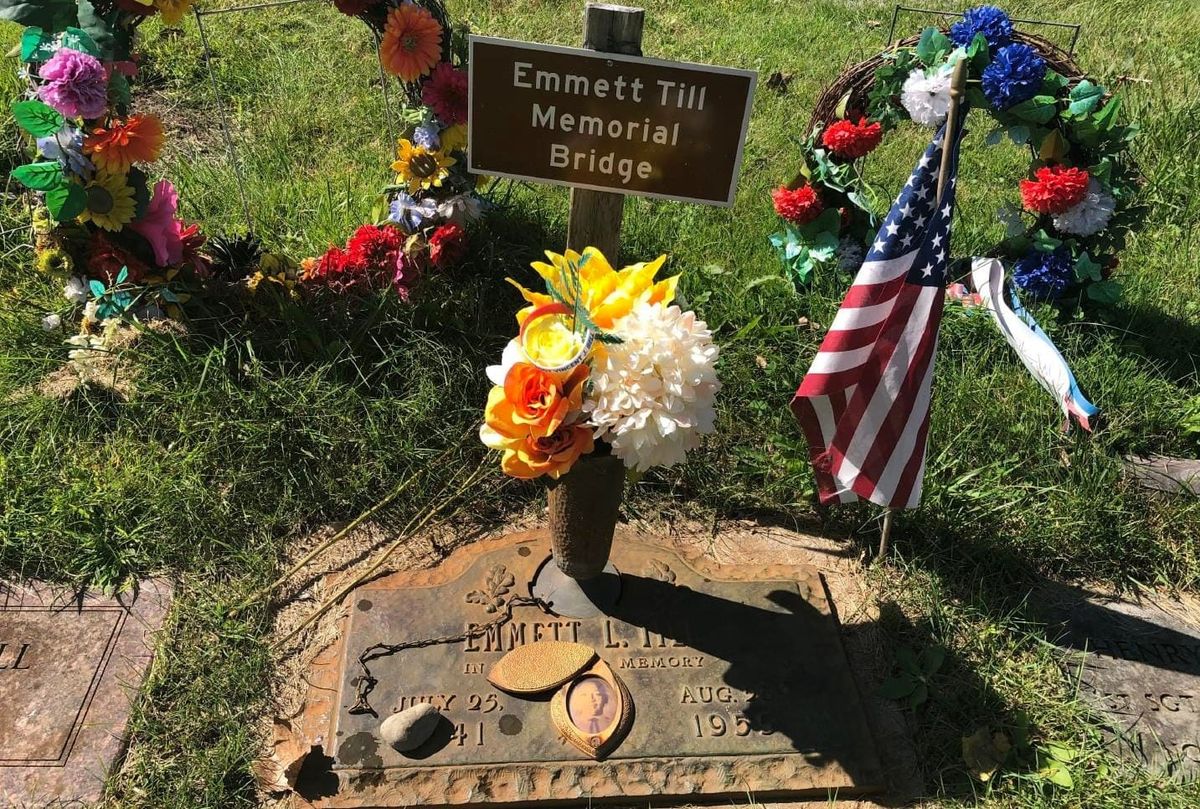
I was in a different time zone when my phone rang. It was my mother calling to tell me that Burr Oak Cemetery was being investigated because workers were accused of desecrating plots, and the Hardisons laid to rest there were not accounted for. It felt like a nightmare. As one of the last remaining Hardisons, I decided to go on a mission to find the answers to the questions that were haunting me.
What Happened, and What Was Lost
In 2009, Burr Oak Cemetery in suburban Alsip, the first Chicago-area cemetery to bury Black people, became a crime scene. Approximately 60 percent of the desecrated graves were in the economy section—the section for families who couldn't afford headstones and buried their loved ones in wooden coffins. Four people were convicted, including former cemetery director Carolyn Towns, who received 12 years in prison. Prosecutors documented approximately 1,500 bones of at least 29 people illegally moved and deposited on cemetery grounds. In May 2024, additional human remains tied to the scandal were discovered on the grounds.
Families who filed timely claims received $100 each from the Perpetua Trust. Many didn’t file or didn’t know how. The trust is now closed, and that money is gone.
Edward "Glass" Boone, chair of Friends of Burr Oak Cemetery, was at the cemetery the day the Cook County Sheriff raided the grounds on July 9, 2009. He had been protesting conditions at Burr Oak since 1997, staging a one-man protest at the gates. "Traffic was backed up for blocks," he told me. "Hundreds of people walking in the rain trying to find graves." He paused. "I connected it to post-slavery. Formerly enslaved people walking away from plantations didn't know where they were going. Just walking."
Boone's mother was buried at Burr Oak in 2008, and he suspected she hadn't been buried at the proper depth. He sharpened a steel pole, measured the grave himself, and obtained a court order requiring the cemetery to reinter her properly. The cemetery ignored it. He returned to court. A reinterment date was finally set for July 10, 2009, the day after the raid.
Resources That Existed and Disappeared
In the aftermath of the scandal, the Cook County Sheriff's Department established two family hotlines, a dedicated investigation email, and an in-person intake process at Eisenhower High School in Blue Island. Those resources are now gone. Both phone numbers are dead. The investigation email bounced back immediately when I tried it. The official post-scandal website, burroakmemorial.com, went dark in September 2024 with no announcement and no replacement.
Most significantly, the Chicago Tribune, in partnership with the Cook County Sheriff's Office, built a searchable headstone database in 2009 documenting more than 9,500 of Burr Oak's 50,000 marked headstones. The site, BurrOak.net, went dark in September 2024 with no announcement or replacement. The Chicago Tribune did not respond to a request for comment at the time of publication.
That same database contained a photograph of my father's headstone. Edward Lee Hardison Jr., US Navy. The image was photographed by the Cook County Sheriff's Office on August 21, 2009. I had no idea it existed until I found it while reporting this piece, after stumbling across ghost links on a Saturday night.
Sixteen years later, families search from their phones and find each other in Facebook groups. When the analog resources crumbled, death workers stepped in.
What's Still at Risk
The very framework built to prevent another Burr Oak is now set to disappear. The Cemetery Oversight Act, the law passed in direct response to this scandal, is scheduled to expire on January 1, 2027, with no plan announced for renewal or replacement. That law is what gives the Illinois Department of Financial and Professional Regulation its authority to license, inspect, and discipline cemeteries, and it is the same agency families are directed to when they file a complaint. If it sunsets without a replacement, the formal complaint pathway families rely on could change or lapse altogether.
"We cannot, with any element of humanity, just look at this as a crime scene, wipe our hands, and walk on. There's no disconnecting us from that cemetery."
The physical conditions tell the same story of slow abandonment. The kiosk that once helped visitors locate grave sites is currently not functioning. Of the estimated number of people buried at Burr Oak, only about 40 percent had grave markers. Graves without markers were easier to disturb and harder to identify. Some remains have dissolved into the soil. Increased flooding tied to climate change continues to threaten the graves that remain.
What Exists Now
Tammy Gibson, founder of the Illinois Black History Museum and co-organizer of Friends of Burr Oak Cemetery, has seen firsthand what families experience when they finally find someone who will listen. "They become upset, they come troubled," she told me. "They're already missing their loved ones. They don't want to come here being even more agitated when they see the conditions, or can't find their loved ones."
Friends of Burr Oak Cemetery was founded as a nonprofit in November 2025 and has become the primary community resource for families still searching. Its Facebook group grew to over 2,300 members in four months—proof of how long families have been waiting for somewhere to turn.
The group serves as a liaison between families and the cemetery's current ownership, the Carter family, who were not involved in the 2009 scandal. "When I call the cemetery, they respond," Boone said. "I want families to know that if they're having an issue, they can come to us."
Gibson and Boone attend regularly, checking conditions and showing up for families who can't make the trip. This past Mother's Day, Friends of Burr Oak and A.R. Leak Funeral Chapels offered free carnations to the first 100 visitors. Boone's Change.org petition gathered 1,516 verified signatures, and in 2026, Burr Oak was officially added to the National Register of Historic Places—a designation he hopes will unlock funding for preservation and a deeper investigation into unidentified remains.
Cook County Sheriff Tom Dart, whose office led the original 2009 investigation, spoke on record about what his office can still offer families today. "We cannot, with any element of humanity, just look at this as a crime scene, wipe our hands, and walk on," Dart said. "There's no disconnecting us from that cemetery." Families who can't get responses from Burr Oak directly should contact the Sheriff's office. "We will be really happy to make the calls ourselves."
Commander Jason Moran of the Cook County Sheriff's Special Victims and Forensic Services Division, who served as the lead detective on the original 2009 investigation, still attends Friends of Burr Oak events and continues to help families navigate what the system cannot fully answer. He has worked on this case for sixteen years. "Burr Oak Cemetery was more than just a case to me," Moran said.
Burr Oak Cemetery did not provide an on-record comment for this piece. Operation PUSH did not respond to multiple requests for comment.
What I Found While Reporting
While reporting this piece, Burr Oak Cemetery responded to my inquiry and sent me official burial records for my father, Edward Lee Hardison Jr.; my grandfather, Edward Lee Hardison Sr.; and my infant sister, Candiace. The file includes a map of where they are resting, in section 7, fourteen rows apart. My father's headstone was photographed by the Sheriff's office in 2009, sitting in a database I only found because I was looking at ghost links on a Saturday night.
I am still waiting to confirm whether his grave is intact. That answer hasn't come yet. But I know where he is. After years of dead ends, this is a revelation.
What You Need Before You Start the Search
Now that you know what was lost, here is how to begin your own search. Before you start, have the following on hand: your state ID, a copy of your loved one's death certificate, and their full name and estimated date of death. You won't need your state ID to contact Burr Oak directly, but you will need it to file a formal complaint.
All questions about loved ones should go to Burr Oak Cemetery directly at burroakcounselors@gmail.com. Send your loved one's full name and date of death. A staff member will respond with burial record documentation, including section, row, grave, and lot number. That simple email is where I found my family. Also note: If you know your family had a headstone, and you do not receive proof, verify whether it is still there. If not, that is when you file a complaint.
If your loved one served in the military, file a Standard Form 180 with the National Personnel Records Center at nara.gov. This process takes the longest, and some correspondence arrives only by mail.
If You Are a Burr Oak Family Still Looking for Families, Start Here
- Burr Oak Cemetery: burroakcounselors@gmail.com — send full name and date of death
- Friends of Burr Oak Cemetery: friendsofburroak@gmail.com — Ed Boone and Tammy Gibson will advocate directly on your behalf
- Cook County Sheriff's Office: If Burr Oak is unresponsive, the Sheriff's Office has offered to assist families directly
- Veterans: File Standard Form 180 at nara.gov
- Complaints: Illinois Department of Financial and Professional Regulation at idfpr.illinois.gov. Note: the state law governing cemetery oversight is set to expire January 1, 2027. If you are reading this after that date, confirm the current complaint process before filing.
- The Circle of Rest: For families of unidentified remains, contact the Cook County Sheriff's Office