Special education gaps are pushing CPS students from school to school. Can the school board fix it?
A Hegewisch mom, whose son is only in kindergarten and in his third school, wants answers. Here’s who’s accountable when CPS falls short on special education services and what the next school board can fix.
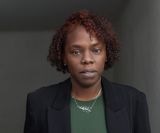

Carla Rivera’s 5-year-old son is in kindergarten, but he is already attending his third school.
Rivera, 48, a parent outreach coordinator who lives in Chicago’s Hegewisch neighborhood, said she first noticed that her son was not meeting some developmental milestones when he was about a year old. She sought early intervention services, but said delays in getting him evaluated meant he did not begin receiving occupational and behavioral therapy until he was about 2½ years old.
When it came time for school, Rivera said another problem emerged: The schools closest to her did not necessarily have the special education services her son needed.
Her son attended Henry Clay Elementary for pre-K3, Wendell Smith Elementary for pre-K4 and now attends George Washington Carver Elementary for kindergarten. Each move came down to which schools offered the program he needed and whether classrooms had enough support, Rivera said.
Rivera said she made several calls to CPS to secure his initial placement at Henry Clay, which was closer to home than another school the district had proposed. She later sought a different school for pre-K4 and said her son could not remain at Wendell Smith for kindergarten because it did not offer the program he needed.
For parents trying to get their children the services and resources they need inside Chicago Public Schools, identifying the problem can be only the beginning. Families also have to figure out who has the power to fix it.
That question carries more weight ahead of Chicago’s November school board election: When a school doesn't have the staff, services, or resources a student needs, who is responsible for fixing it?
The Chicago Board of Education oversees districtwide policies, budgets, and school performance. Its members also appoint and evaluate the CPS chief executive officer, who oversees the district’s day-to-day operations.
Individual board members cannot make decisions on their own. Under the board’s bylaws, official decisions require a vote at a public board meeting.
Chicago voters will elect 20 district representatives and a citywide board president in November, completing the transition from an appointed school board to a fully elected one. The new board takes office Jan. 15, 2027.
For South Side families, understanding where that responsibility falls could matter not only when something goes wrong, but when deciding what they should expect from the people asking to represent them.
Conflicting answers from CPS
Rivera said she had to do much of the work herself to figure out where to go and who could help her son.
The hardest part, she said, has been ”finding a good resource where they give me the right correct information,” she told The VP Chicago. “Every single time I try to get information, it’s always different, and I don’t know who to believe or where to go to get the accurate information.”
Her son has an Individualized Education Program, or IEP, outlining the special education services and supports he is supposed to receive. But Rivera said she received conflicting information about when his needs could be reevaluated. At one point, she understood that it would happen every year. Later, she said she was told every three years.
Both timelines exist under federal law. IEPs must be reviewed at least annually, while students generally must be reevaluated at least every three years. Reevaluations can occur sooner if needed.
What to do when IEP services fall short
Families have options when a school isn’t providing the services in a child’s IEP.
Rachel Shapiro, managing attorney at Equip for Equality, an Illinois organization that advocates for people with disabilities, said families can begin by requesting an IEP meeting.
Parents do not have to wait for their child’s annual review to request a meeting, she said.
Shapiro also encourages families to document conversations with school staff in writing, including through email, so there is a record of what was discussed and promised.
“If it’s not in writing, it didn’t happen,” Shapiro said.
If the problem remains unresolved, families have other options, including mediation, filing a complaint with the Illinois State Board of Education or requesting a due process hearing.
Shapiro said mediation can offer families a less formal way to resolve disagreements, while due process hearings can involve witnesses, documents and testimony.
Equip for Equality operates a free helpline where families can receive information about their rights and guidance on advocating for their children. It also provides legal representation in selected cases.
Frank Lally is a senior policy analyst at Access Living, a Chicago disability rights organization. Lally, who focuses on special education and voting issues, said families often begin by contacting the case manager at their child’s school.
When concerns remain unresolved, families can seek assistance from a CPS special education coordinator, who works with multiple schools.
Where the breakdowns happen
Lally said that although districtwide decisions receive considerable attention, many of the problems affecting students and families arise inside individual schools.
He pointed to vacancies among special education teachers and classroom assistants as a major concern. When those positions go unfilled, he said, students can miss services they are entitled to receive under their IEPs.
Even when families know who to contact, resolving those problems can be difficult.
Shapiro said some families do not know where to turn when a school tells them it cannot provide a particular service. Language barriers can make the process even harder for families who need interpreters or are unfamiliar with the school system.
Rivera, whose family speaks English and Spanish at home, said she has had to research school placements and available services herself. She worries that parents who do not know what options exist may simply accept the first placement offered to their child.
Asked whether she understood how responsibility is divided among her son’s school, CPS administration, and the Board of Education, Rivera said she still does not have a clear understanding of how the system works.
CPS is already short on money
The accountability questions come as CPS continues to operate with less funding than Illinois calculates the district needs to adequately serve its students.
As The VP Chicago previously reported, CPS was funded at 73.3% of its adequacy target in fiscal year 2026, according to the state’s evidence-based funding formula. The district estimates it would need an additional $985 million to reach the state’s 90% adequacy goal by fiscal year 2027.
But additional funding alone doesn’t answer the accountability question. As voters prepare to choose their school board representatives in November, families still need to know who makes decisions about the resources schools receive and who they can turn to when their children aren’t getting what they need.
What the school board can and can’t fix
In an emailed response to The VP Chicago, Chicago Board of Education communications manager Shelia Pegues-Porter said CPS administration handles the district's day-to-day operations and student services, while the Board oversees districtwide policies, budgets and performance.
Pegues-Porter said board members can raise concerns and review district performance through public meetings and committees, including the Special Education Advisory Committee, which is scheduled to convene in October. Families can also submit public comments, speak at board meetings and request office hours with board members. Meeting agendas and other materials are available at cpsboe.org.
Lally said there is an important distinction between helping one family resolve a problem and addressing issues affecting students across the district.
He does not believe individual board members should become another step families must navigate whenever they have a concern about their child’s services. Instead, board members should focus on broader problems that require districtwide decisions.
“How can we set up the system so that not everyone needs an advocate or a board member in their back pocket to solve their issue?” Lally said.
Transportation is one example. Lally said recurring problems, including students arriving late to school or leaving before the school day ends, are issues that warrant attention from the Board of Education.
CPS already has a transportation policy that sets goals for school bus service and calls for regular review.
For voters, the distinction matters. The November election gives families an opportunity to ask candidates how they would address districtwide problems, including staffing shortages, transportation and access to special education services, and how they would hold CPS leadership accountable once in office.
What Rivera wants from the next board
For Rivera, accountability cannot fall on one person.
She described responsibility as a chain that includes parents, teachers, principals, CPS leadership, board members, and related officials. When information does not move between those levels, she said families are left trying to fill gaps themselves.
Rivera wants elected board members to understand child development and the differences in resources available to students across the city. She pointed to what she sees as inequities between schools on the South Side and better-resourced schools elsewhere in Chicago. Rivera also hopes to help other parents facing similar challenges by sharing the resources and contacts she has gathered while navigating CPS.
But she wants to go further than helping families one at a time.
“I cannot fix the world,” Rivera said, but she wants to bring together parents experiencing similar problems so they can advocate collectively and “make them hear us.”