In Chicago, where you live decides how long you live — and that's no accident.
The widest life expectancy gap in the country runs through our city. Here's how it got that way and what Chicagoans are doing about it.

The widest life expectancy gap in the country runs through our city. Here's how it got that way and what Chicagoans are doing about it.
Drive north up Lake Shore from 79th. The lake stays on your right. What changes is the storefronts, the buildings going up, the air quality, and the ages on the headstones. By the time you hit Streeterville, you've crossed into a Chicago where people, on average, live thirty years longer than the one you started in. You're still in the same city.
In downtown Streeterville, residents live to be 90 years old on average. But eight miles south, Englewood residents live roughly 60 years. In 2019, NYU researchers called this 30-year life expectancy gap the widest in the country.
Dr. Dan'iel Kendricks, EdD, chief program officer of the Public Health Institute of Metropolitan Chicago, calls it the health impacts of structural disinvestment today. “There’s no reason why there should be a 20‑year life expectancy gap just based on the zip code that you live in,” she said. “Poor health outcomes [are] directly tied to poverty, and poverty is directly tied to disinvestment, particularly disinvestment on the South and West sides of the city.”
“When we look at the social determinants of health, we’re looking at how easily it is for individuals to access the resources that they need to live healthy lives. Access to housing, food, transportation, employment, educational opportunities—these things all make us a person as a whole."
In community areas like the Loop, life expectancy can reach the high-80s. Just a few miles away, in Black and low-income neighborhoods like Greater Englewood and West Garfield Park, it drops nearly 20 years, according to Chicago’s Health Atlas.
Zip code isn't destiny. But in a highly segregated city like Chicago, where you live determines your school choices, your job opportunities, and your health.
Researchers who study these disparities point to a set of conditions they call the social determinants of health—the circumstances in which people are born, grow, live, work and age.
“When we look at the social determinants of health, we’re looking at how easily it is for individuals to access the resources that they need to live healthy lives,” Kendricks said.
“Access to housing, food, transportation, employment, educational opportunities—these things all make us a person as a whole."
On Chicago’s South and West Sides, decades of structural disinvestment have shaped each of those conditions for the worse.
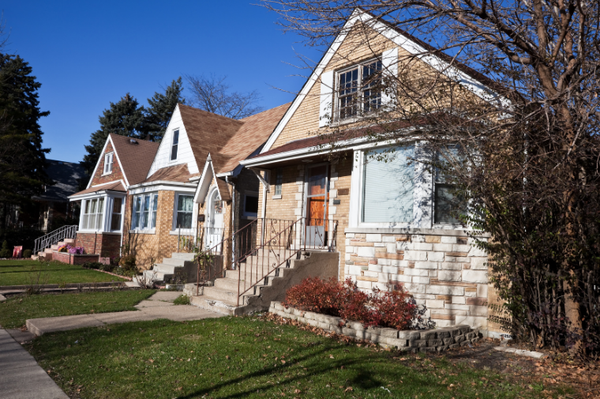
In the 1930s, banks systematically denied mortgages to households in Black neighborhoods. On maps, the federal government drew red lines around Black and immigrant areas, marking them as risky sites for mortgages. At the same time, property deeds in white neighborhoods often restricted their sale to Black Chicagoans, stopping them from moving to other parts of the city.
The legacy of these now-illegal housing discrimination practices lingers today. They locked Black families out of home ownership and the wealth it generated for white families. Deemed less desirable for investment, these neighborhoods also became more attractive to new polluting projects, like highways and industrial waste sites.
“If we take a look back at redlining practices that existed in Chicago, where we are today is still a direct correlation and direct impact on the segregation that we see in Chicago,” said Kendricks.
Dividing Black communities with highways resulted in higher volumes of traffic running through them, exacerbating air pollution in surrounding neighborhoods. In neighborhoods near highways, factories, or waste-processing plants, residents who rely on open windows for ventilation are bringing outdoor pollution directly into their homes.
“If your only source of filtration is opening windows, but you live by a factory, or you live by a garbage plant, or you live by a highway, you're more likely to bring a lot of pollutants into the home,” said Mariah Murray, an epidemiologist and medical student at the University of Illinois Chicago. She has spent the past year researching the geographic relationship between asthma-related emergency department visits and housing, funded by a grant from the Chicago Asthma Consortium.
“When we looked at the asthma-related emergency department visits, we saw a lot in all of the neighborhoods south of 47th Street,” Murray said. “The more north that you went, the visits dropped significantly.”
Asthma is a preventable and treatable disease, she said, but poor housing conditions, like mold, pests, and certain chemicals, can worsen its impact. “In a lot of neighborhoods, if residents fear retaliation or don’t understand how to advocate for themselves, they’re less likely to speak up about building codes being enforced, and we’re seeing that show up in kids’ asthma.”
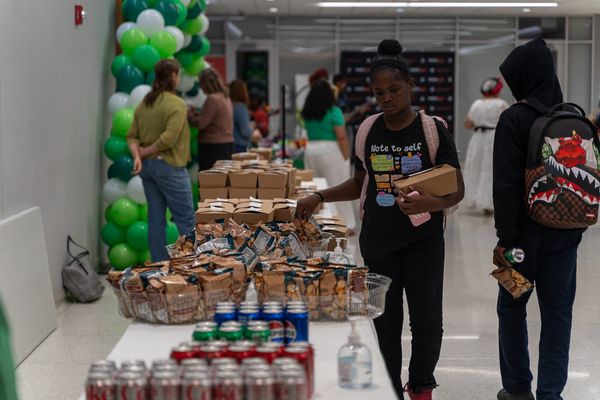
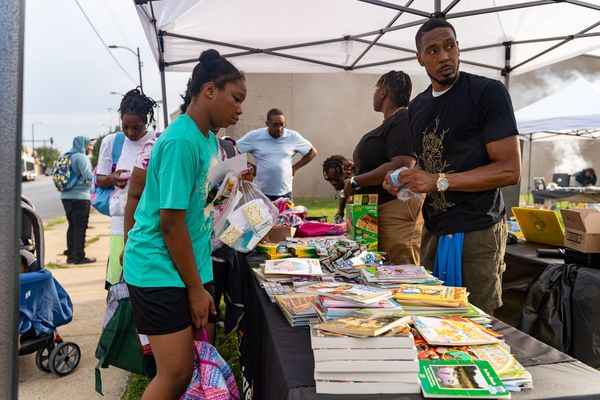
In neighborhoods across the South and West Sides, health workers and community organizations have stepped in to fill some of the gaps left by disinvestment, though Kendricks says they rarely receive the recognition or resources they deserve.
“People [who] are at the community-based organizations and nonprofits are often overlooked,“ she said. “They really are heroes in the community. They are trying to put the band aid on huge gaps that exist across the city—and those organizations are often underfunded.”
Chicago’s food deserts, or low-income areas where residents have no grocery stores within a mile, are most common on the South and West Sides. Despite Black people making up only a third of Chicago’s population, nearly 80% of Chicagoans who live in a food desert are Black, according to a 2018 study in Health & Place Journal.
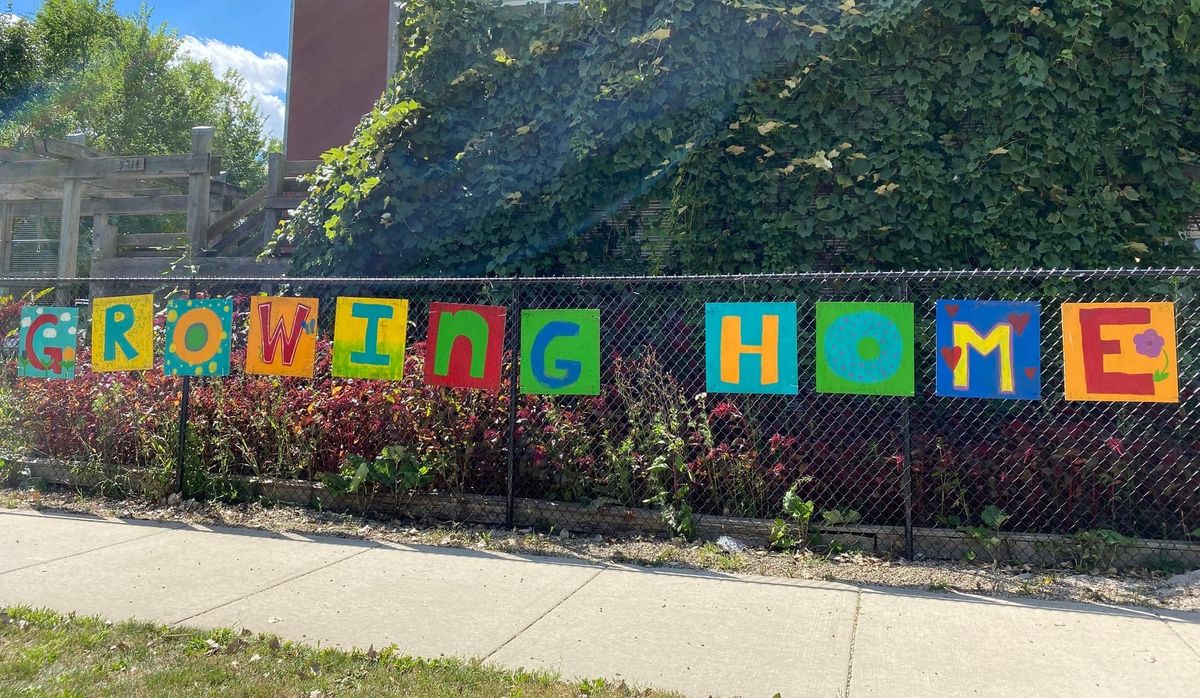
Jayna McGruder first started farming last year while working at Growing Home, an organic production farm and social enterprise in Englewood.
While growing up in South Shore, she traveled long distances with her family to get groceries. When her neighborhood’s Local Market opened in 2019, it ended the area's status as a food desert. But still, she finds fewer options for buying healthy, nutritious food nearby than in other neighborhoods on the North Side.
“There are so many liquor stores and convenience stores and cook marts and chicken shacks,” McGruder said. “And there's not a lot of grocery stores or community gardens, and not a lot of fresh, healthy food.”
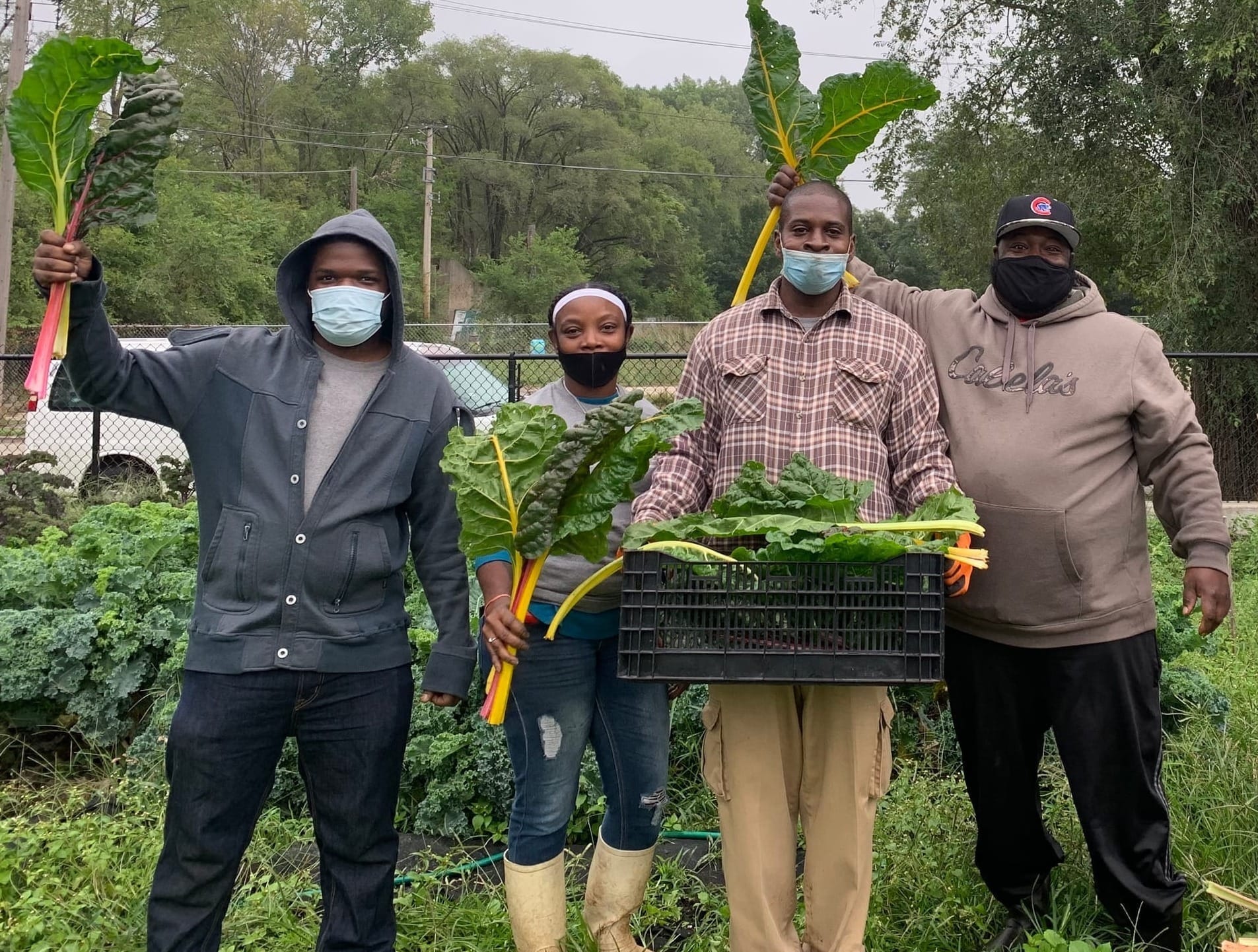
Now, she works with Advocates for Urban Agriculture, a community organization training other urban farmers to grow their own food and expand neighborhood-scale farming in disinvested parts of the city.
“I see the pollution of land and the pollution of our diets as very interconnected. So the fact that we don’t have fresh food, it does integrally affect our health,” she said. “Fresh food is your body’s ability to clean out waste. Fresh food is your ability to not have an inflamed body system. And I know that my community has a lot of health problems like respiratory problems, heart issues, and cancers.”
McGruder hopes that community gardens and urban farm networks will empower local residents to grow their own food despite the barriers.
“We can put pressure on our local government, because we do need resources,” she said. “We can come together as block clubs or churches and buy our own plots and commit to using organic fertilizers and pest management strategies. We can show our agencies and electeds that community-operated urban agriculture is a community value.”
For Kendricks, tackling Chicago’s health disparities first starts with being honest about where they come from.
“People outside of the city oftentimes take a blame-the-victim approach to understanding what’s happening in Chicago,” she said. ‘Nobody is deciding that they want to live without the best quality of life. People oftentimes just don’t have access to the resources and the supports that they need.”