The South Side parents who fought for an elected school board say this isn't what they wanted.
In November, every school board seat is on the ballot for the first time in Chicago history. The people you elect will decide what comes next. Here's what you need to know.

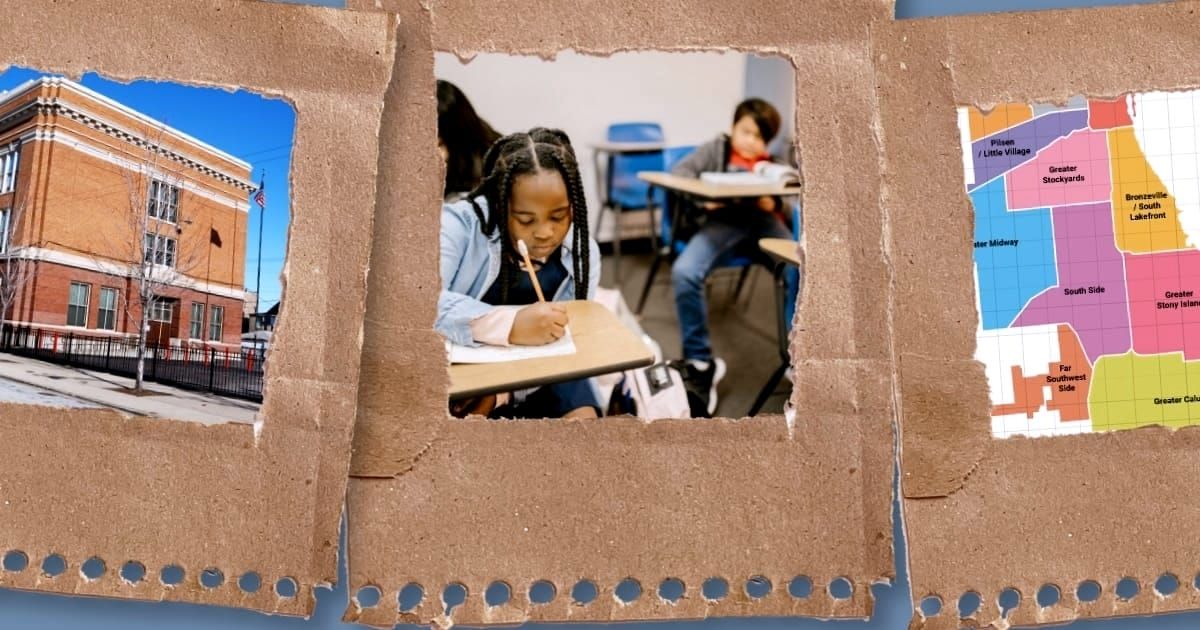
One day, everything feels normal. Then you get a letter saying your child's after-school program is shutting down.
And the people who make decisions like that? For the first time, every one of them will be chosen by you.
For most of the last 30 years, the mayor of Chicago appointed every member of the Chicago Board of Education — a system that's been in place since 1995, when then-Mayor Richard M. Daley took control of CPS. That started to change in 2024, when voters elected 10 members to a new 21-member hybrid board. The mayor still appoints the other 11, including the board president. In November 2026, every seat goes up for election. The fully elected board takes office in January 2027, under a state law signed by Gov. JB Pritzker in 2021.
That might not sound like a big shift at first. But before this, the people making decisions about your child's school weren't chosen by you. They were chosen by City Hall. Now, that starts to change.
Dr. Afrika Porter, a Local School Council member and activist on the South Side, has been thinking about that shift — and what it means when parents start paying attention to who holds that kind of power.
"When parents start paying attention, they begin to see that their children matter," she said. "They start learning who these people are that are making decisions for their families — what programs are offered, what resources are available, even things like language programs, STEM and STEAM opportunities, extracurriculars, and where the funding is coming from and where it's going."
In other words, it's not just about meetings and titles. It's about what your child actually has access to every day. According to the Chicago Board of Education, the board decides if schools stay open or close. They decide how money gets spent. They hire the CEO, who runs the entire system. They shape discipline policies that directly affect your child. They approve the district's $10.25 billion FY2026 budget, set the school calendar, and approve contracts with vendors and the teachers' union.
What the board doesn't decide is what happens inside your child's classroom day to day. That's your principal and your Local School Council — an elected body of parents, community members, teachers, and staff that governs each CPS school. LSCs were established by the 1988 Chicago School Reform Act, and they hire and evaluate principals and approve the school's budget. The board sets the rules of the system. The school runs the school.
So when a school closes, when a program disappears, or when resources show up in one neighborhood and not another, those decisions don't just happen.
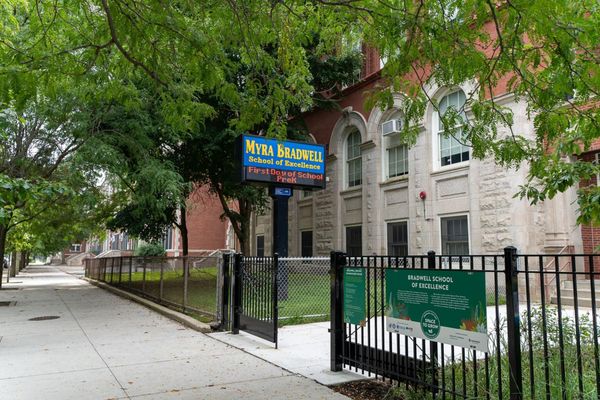
For years, decisions have been made about our schools without our input. In 2013, then-Mayor Rahm Emanuel and a fully appointed school board voted to close 50 public schools — the largest mass school closure in U.S. history, according to NPR and the Chicago Sun-Times. More than 12,000 students were displaced. A Chicago Sun-Times and WBEZ analysis of CPS data found that 35 of the 46 school buildings closed that year were in majority-Black census tracts. Most of those schools were in Black neighborhoods on the South and West Sides, and many families had to start over.
Many of those buildings are still sitting there.
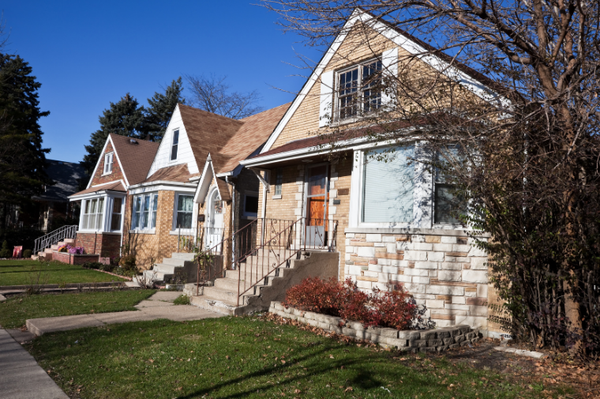
"I live in Bronzeville. There are closed schools all over the place," said Cassandra Kaczocha, a CPS parent and board chair of Raise Your Hand, a statewide parent advocacy organization that lobbied for the elected school board for years. "These are now dilapidated buildings that are just eyesores, tanking everybody's property value. Those are community spaces. They belong to all of us. Our tax dollars continue to pay for them. There was harm done by not educating students in them. And now there's harm done by them sitting there vacant."
A lot of parents have felt this for years — like decisions get made somewhere else and families are left to deal with the impact. Some schools seem to have more resources, while others are constantly being asked to do more with less. South Side communities have been trying to play catch-up for decades. It's been this way for a long time. And the schools with the least? They're often the first to close.
Dr. Nicole J. Sanford, a South Side parent and educator, says she's seen up close how this lands on Black families.
"Often Black parents are not listened to, and they're dissuaded from advocating for their kids. Then, when they do speak up, it's seen as being argumentative. Something has to change if you want Black parents to be active in the educational process."
She also points out that what students need isn't one-size-fits-all.
"All kids don't learn the same. You have to think about the whole child and make sure there are resources available for all of them."
Porter says a lot of parents don't fully realize how much power they already have.
"I wish parents really understood that the power is in them," she said. "You don't have a school without the parents. Who's getting the kids there every day? Who's helping them with homework? Who's making sure they show up?"
And that showing up matters more than people think. CPS uses a student-based budgeting system that ties school funding directly to enrollment.
"The school gets funded based on students being there," Porter said. "That's why there's so much attention around the first day of school. It's not just about outfits or shoes — it's because attendance impacts funding."
That's how the system works on paper. But they aren't in your child's classroom. They don't see your child day to day. The people in your school do.
Parents, community members, and organizers pushed for an elected board for over a decade. Groups like Raise Your Hand, Kids First Chicago, Grassroots Education Movement, and Kenwood Oakland Community Organization organized parents for years. After years of pressure, the state legislature passed the law that made the elected board possible. The same law included a moratorium that blocked CPS from closing schools until the elected board was in place, a key demand of organizers who remembered 2013.
"Generations of parents have fought for this right. This board is going to make decisions that impact not only your children but generations of children."
Raise Your Hand staff were in the room as the bill went through reconciliation. Kaczocha sat ready on a text thread, providing input on the negotiations as they occurred. She and other organizers had a vision: school board members who were parents, who showed up in schools, who came to LSC meetings, who acted like neighbors.
"I did believe that having school board members who were parents and regular humans, not appointees, would lead to people who would show up in the schools, come to LSC meetings, understand more," she said. "What we're actually finding is that all those same policies that the appointed board members get held to and trained on by CPS are what the now-elected board members are being told as well."
She said board members are still being told they can't visit schools or meet with families without a CPS lawyer in the room. The structure changed. The culture didn't.
"It still feels like the same kind of process," Kaczocha said. "As a parent, as somebody who works with parents across the city, we're not seeing that engagement. We're not seeing board members really being in community."
That's why, she said, what you do in November matters even more than it might seem. The new board will inherit a system that hasn't yet figured out how to actually listen to parents. The people you elect will decide whether that changes.
What's at stake in November
The next board won't be inheriting easy decisions. The state law that has kept CPS from closing schools is set to expire in February 2027, according to Chalkbeat Chicago, which means the next board will be the one deciding what happens after that. CPS is facing what its own leaders have called a serious structural deficit, and the board will have to decide where the money goes and where it doesn't. They'll also be overseeing a new CEO, Dr. Macquline King, whose three-year contract began July 1, 2026, and runs through June 30, 2029.
And underneath all of that is Kaczocha's bigger question: whether the new board will actually engage with the people whose lives it shapes, or whether it will operate like the appointed board did — at a distance.
"My greatest hope for this fully elected school board is that they put structures in place that make sure that the families in public schools, the people who are experiencing their policies in action, have a way of participating in the creation of those policies," Kaczocha said.
That's not going to happen on its own. It depends on who sits in those 21 seats.
What to do next
You get a say now for the first time in a long time. Here's where to start:
- Find your school board district, or check your voter registration card.
- The election is in November 2026. Every seat will be on the ballot.
- As candidates file to run, look up who's in your district. Ask what they say about school closings, funding, and discipline. Ask whether they plan to show up in your school. Ask whether they'll meet with you. The parents who fought for this board say those are the questions that matter.
"Every election matters for school board," Kaczocha said. "Generations of parents have fought for this right. This board is going to make decisions that impact not only your children but generations of children. Even if you don't go to your neighborhood school, what happens there impacts your neighborhood — your property values, your crime rates, what gets invested in your community. It impacts all of us."